






You take off your watch at the end of the day and there it is: a pale, slightly indented patch of skin. Maybe it's a little dry. Maybe it itches. Maybe it's just… there.
You're not allergic to your watch. You're probably just wearing it wrong.
Skin irritation from wearables is one of the most common complaints — and one of the most fixable. The cause is almost always a combination of pressure, moisture, and friction. Not the device itself. Here's how to tell what you're dealing with, and what to do about it.
First: Is It a Pressure Mark or Irritation?
These look similar but need different responses.
Pressure mark: A temporary indentation or pale patch that fades within 30–60 minutes of removing the watch. No itching, no redness, no roughness. This is just the band pressing on your skin — usually a sign it's too tight, but not a medical issue.
Irritation: Redness, dryness, flaking, itching, or a rash that persists after you take the watch off. This is your skin reacting to trapped moisture, friction, or a material sensitivity. It needs attention.
If it's just a pressure mark, loosening the band will fix it. If it's irritation, work through the fixes below.
Fix 1: Loosen the Band — One Finger Should Fit Underneath
This is the highest-impact change, and it takes five seconds.
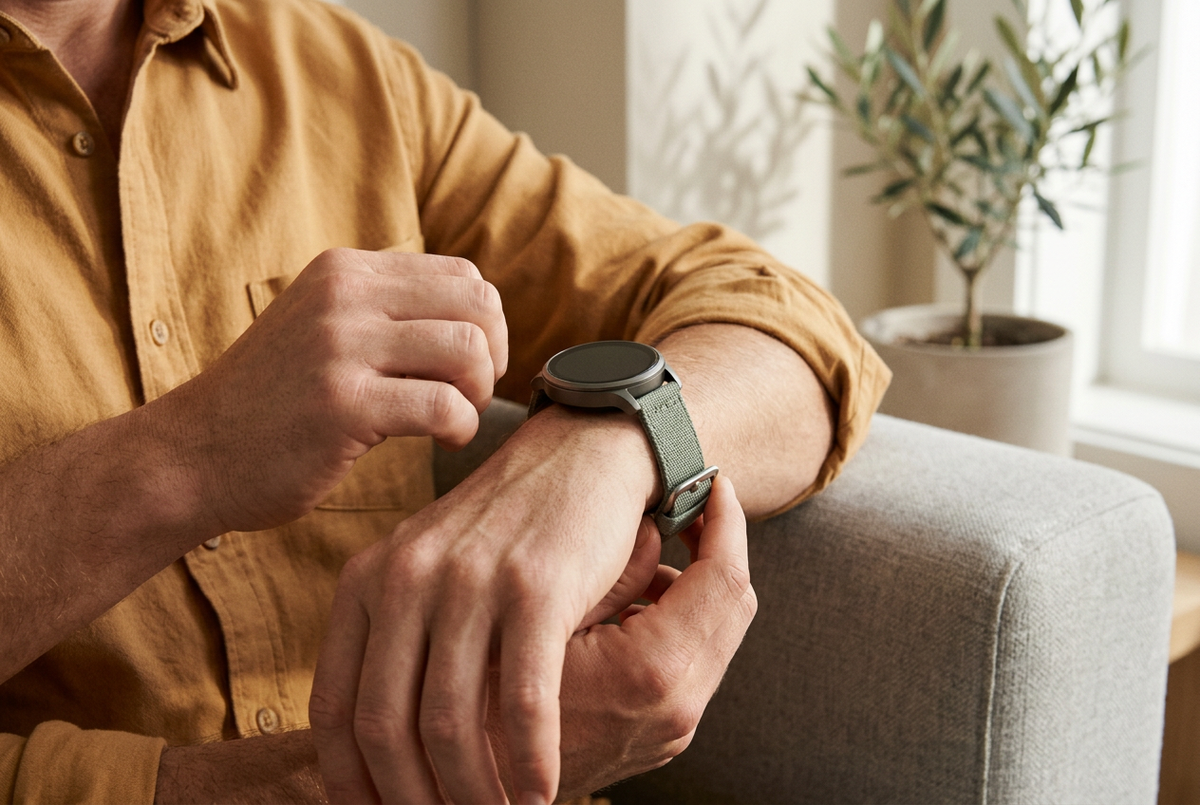
The test: Slide one finger under the band. It should go in with slight resistance — not easily, not with force. If you can't fit a finger under, it's too tight.
-
Daily wear: snug enough that the sensor still reads heart rate, loose enough that the band can move slightly
-
Workouts: tighten one notch, then loosen again when you're done
-
Sleep: looser than daytime — your wrist swells slightly overnight
A band that leaves a mark is restricting circulation. That's not how it's supposed to fit.
Fix 2: Give Your Skin a Daily Break
Your skin needs air. Give it some.
Take the watch off for at least one hour every day — ideally while you shower, cook, or read. That's enough time for trapped moisture to evaporate and the skin to recover.
Better: take it off overnight once or twice a week, or switch wrists for a night. Continuous wear on the same spot for weeks is what turns mild irritation into a persistent problem.
If you're tracking sleep: wear it on your non-dominant wrist and swap sides every few nights. Slightly less accurate, considerably kinder to your skin.
Fix 3: Dry the Contact Area After Sweat, Handwashing, and Showers
Moisture is the number one culprit, and it's the easiest to fix.
After every workout: take the watch off, wipe the back of the sensor with a dry cloth, dry your wrist, then put it back on.
After washing your hands or showering: same routine. Water sneaks under the band and stays there for hours.
Weekly: clean the sensor and band with a damp cloth and mild soap, then dry completely before wearing. Sunscreen and sweat residue build up and become irritating over time.
If you can't do this mid-day, at least dry the contact area before bed.
Fix 4: Switch to a Non-Metal Band If You're Sensitive to Nickel
If you've fixed fit and moisture and the irritation persists, suspect the material.
Nickel and chromium are common contact allergens, present in many metal bands and casebacks. Symptoms: redness, itching, sometimes small bumps exactly where metal touches skin.
What to switch to:
-
Silicone or fluoroelastomer — breathable, non-allergenic, easy to clean
-
Nylon or woven fabric — light, breathable, dries quickly
-
Leather — comfortable, but avoid if you sweat heavily; it traps moisture
If the caseback itself is metal and you're sensitive, some people apply a thin layer of clear nail polish over the contact point. Not elegant, but it works. Better still: choose a watch with a plastic or ceramic back.
When to See a Doctor
Most irritation clears up in a few days with these fixes. Some doesn't.
See a doctor if:
-
The rash spreads beyond the band area or forms blisters
-
It's itchy, weeping, or painful rather than just dry and pale
-
It doesn't improve after two weeks of looser fit and daily breaks
-
You suspect an allergy — a dermatologist can patch-test for nickel and chromium
-
You notice numbness or tingling in your fingers, which suggests the band is compressing a nerve
Stop wearing the watch on that wrist until it clears. A few days off beats a month of a worsening rash.
The Bottom Line
Your watch isn't the problem — the way you're wearing it usually is. Loosen the band, dry the contact area, take it off for an hour a day, and switch to a non-metal strap if your skin objects.
You can keep tracking everything and still have happy skin. You just have to let it breathe. 😊

Dejar un comentario
Este sitio está protegido por hCaptcha y se aplican la Política de privacidad de hCaptcha y los Términos del servicio.